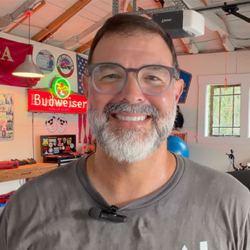
 The destination may stay the same, even when the route changes.
One of the most common questions I hear as a financial advisor is, “What should I do when the market changes?”
My answer is usually simple: Follow the plan.
Not because the plan is perfect, but because it was built with intention. A well-designed financial plan isn’t created just for the easy days. It’s created for unpredictable ones.
Anyone can stay invested when markets are reaching new highs. The real test comes when volatility returns, headlines create fear, or life throws an unexpected expense your way. These are the moments when discipline matters most, and they’re exactly why we spend so much time building a strategy before those moments ever arrive.
Recently, I experienced a situation that reminded me just how important that principle is. It had nothing to do with the stock market, but everything to do with planning.
When the Plan Doesn’t Go as Planned
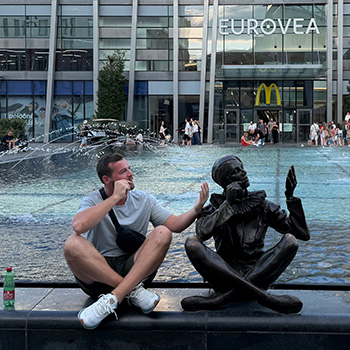
Earlier this year, I started planning a trip to visit some good friends in Slovakia who had graciously invited me to come visit them. We began discussing the trip in January, booked flights and train tickets in March, and had what seemed like a solid itinerary.
The plan was straightforward: fly from Orlando to Frankfurt, connect to a flight to Prague, and then take a train to Bratislava, Slovakia.
Everything was mapped out. Each leg fit together, and I knew exactly how I expected to get to my destination.
Then reality happened.
My flight out of Orlando was delayed, and I missed my connecting flight in Frankfurt. Just like that, I wasn’t making it to Prague as planned, and my train to Bratislava was out of the picture, too.
I had spent months planning the trip, but the original itinerary no longer worked.
My first thought wasn’t to abandon the trip. I still wanted to see my friends, and that goal hadn’t changed. What needed to change was how I was going to get there.
I started looking at my options. The next flight to Prague wasn’t until the following day, and the timing wouldn’t allow me to catch a train to Bratislava that worked with my schedule. I needed a different route.
I spoke with the gate agent before leaving Orlando, explained the tight connection, and was moved to a seat near the front of the plane so I could get off quickly in Frankfurt. For a moment, it felt like I had gotten the plan back on track.
Then I arrived in Frankfurt.
An hour-long wait at customs quickly erased the extra time I’d gained by getting off the plane first. Once again, my original plan wasn’t going to work.
So, I adjusted.
Instead of trying to make the original route work, I found a direct flight from Frankfurt to Vienna, Austria. From there, I would be just about 45 minutes from Bratislava by ground transportation.
My friend made the trip from Bratislava to meet me, and in the end, I arrived a couple of hours earlier than I would have if I’d followed my original itinerary.
The flights were delayed. The connection was missed. The train was no longer an option.
But I still made it to my destination.
The goal never changed. The route did.
 Financial Planning Works the Same Way
 Financial Planning Works the Same Way
Life rarely unfolds exactly as we expect. Markets decline. Interest rates rise. Tax laws change. Careers take unexpected turns. Families grow. Opportunities appear, and unforeseen challenges arise.
But not every change in circumstances means your financial goals need to change.
Sometimes, the destination is still right where you want it to be. You simply need to find a different way to get there.
Maybe a market downturn changes the timeline for a retirement goal. Perhaps a career change creates an opportunity to save more, or a growing family shifts your priorities. Selling a business, receiving an inheritance, or facing an unexpected expense can all change the assumptions that once made your financial plan work.
These events don’t automatically mean the plan has failed. They mean it’s time to evaluate where you are, understand what has changed, and determine whether your current strategy still makes sense.
That’s why financial planning is never a one-time event. It’s an ongoing process of monitoring, evaluating, and adapting while keeping your long-term goals in sight.
The best plans aren’t necessarily the ones that never change. They’re the ones built to adapt when life does.
Knowing When to Stay the Course and When to Adjust
There’s an important distinction between staying disciplined and refusing to adapt.
When markets become volatile, it can be tempting to abandon an investment strategy because the headlines are unsettling or recent performance is disappointing. But reacting to every market change can make you lose sight of the long-term objectives your portfolio was designed to support.
At the same time, following a plan doesn’t mean blindly sticking with a strategy that no longer fits your circumstances.
A thoughtful financial plan should be revisited when meaningful changes occur. Your goals may evolve, your time horizon may shift, or your financial situation may look different than it did when you first created the plan.
The key is to distinguish a temporary detour from a genuine need to change direction.
Whether you’re navigating an investment portfolio or navigating an airport after missing a connection, the principle remains the same:
Follow the plan until the plan no longer works. Then create a better plan and keep moving forward.
 Follow the plan until the plan no longer works. Then create a better plan and keep moving forward.
Success isn’t about avoiding every detour. It’s about knowing when to stay the course, when to adjust, and how to keep moving toward the destination that matters to you.
If life has taken an unexpected turn: a career change, retirement, a growing family, the sale of a business, or simply a season that looks different than you anticipated, it may be time to revisit your financial roadmap.
Sometimes, you don’t need a new destination. You just need a fresh look at the route.
And sometimes, having someone to talk through those decisions with can make all the difference.
Welcome to Weekend L’Attitude
Thanks for joining me for the first post on Weekend L’Attitude.
The idea behind this blog is simple: share stories from my travels, experiences outside the office, and the occasional lesson that connects them to financial planning and investing.
Some posts may focus on a recent trip or something I’ve learned along the way. Others will offer a glimpse into who I am beyond my work as a financial advisor. From time to time, I’ll share perspective on the markets, the economy, and the financial landscape we’re navigating.
My hope is that these posts are informative, relatable, and worth taking a few minutes to read.
Until next time, keep your destination in sight, stay flexible when the road changes, and remember that a detour doesn’t mean you’re headed in the wrong direction.
See you down the road.
October 2026
The opinions voiced in this material are for general information only and are not intended to provide specific advice or recommendations for any individual. All performance referenced is historical and is no guarantee of future results. All indices are unmanaged and may not be invested into directly.