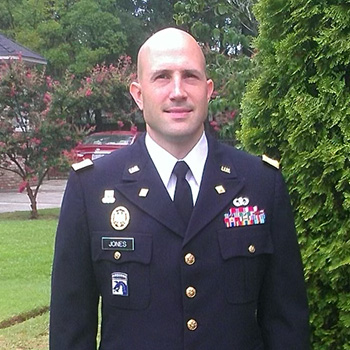
 My partner and friend, Dr. Chad Jones, was recently asked to share his thoughts on leadership for the United States Military Academy class newsletter. He is a blessing to Team Devoted, our clients, and me. These are his words.
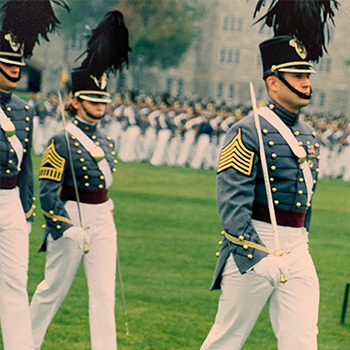
I’ve been thinking a lot about leadership lately. With 4 years at West Point, a 20-year Army career that included deployments to combat environments, and an almost 14-year career in the civilian sector, leadership considerations have been a constant companion of mine for decades. Most of the leadership my classmates, fellow soldiers, and I learned and practiced had obvious applications, from basic training to upper-class cadet responsibilities to actual platoons and echelons higher, to corporate offices or small entrepreneurial teams to upper management, C-suites, and boardrooms. We’ve been doing it now for so long, it’s ingrained into who we are. We’ve failed and succeeded enough to fill a book with powerful vignettes on the subject. At this point, there should be no reason to think much about leadership outside of a mentoring capacity. It’s on cruise control, right?
A New Season of Leadership
The hard-wired framework on leadership for us military-types is simple: BE the example, KNOW yourself and your soldiers, and DO the work and develop subordinates. Lately, I’ve felt a distinct change in perspective, though—not a rejection of BE, KNOW, DO, but a deeper application of it. This isn’t a repudiation of the last 30 years of my leadership journey. It’s the natural consequence of entering a new season. I am now over-50, an empty-nester, and in the twilight of a working career (God willing). As I consider the next 10-20 years, I see an off-ramp from the systems that have defined me. Work. Family logistics. The objective gears of a functioning machine. For decades, my leadership operated inside those structures. Eventually, it may not. No flow charts, subordinates, superiors, nested mission sets, kids to wrangle, teams to motivate, family outings to orchestrate or calendars to deconflict with the kind of regularity I’ve become accustomed to.
Thankfully, it’s not a purpose that I feel will be lacking – I know exactly what I want to do when I stop receiving a paycheck. I also understand that I’ll still have some, yet far fewer, opportunities to lead my family in a tangible way. I may continue to consult with my team at Allen & Company for many years. However, with this new change of season fast approaching, I’ve really enjoyed delving into exploring what leadership and its purpose look like for me moving forward.
 Less Positional, More Personal
 Less Positional, More Personal
In the season ahead, I feel leadership becomes less positional and more personal. Less about scale and more about depth. No more promotions or awards, evaluations or concrete feedback. Maybe it’s the purest form of leadership: leadership of self. As my classmate, newly promoted COL Shoshanna Lane, pointed out at her recent ceremony, leadership must start with knowing who you are. Early in my leadership experience, I had to know who I was enough to sound confident, but the purpose was always to lead others. Maybe this new season is a full-circle moment. Maybe the purpose in this new season is to complete the circle in a life cycle of leadership. Do we start with knowing who we are, and end with leading ourselves into self-actualization? What might that look like?
Leadership of Self
Earlier seasons required clarity about who I was so others could trust and follow me. Identity-supported execution. In this season, identity becomes the work itself. Leadership of self might look like:
- Radical honesty about strengths and diminishing edges.
- Letting go of identity anchors tied to title, productivity, or indispensability.
- Replacing performance-based confidence with presence-based confidence.
This isn’t self-indulgent, in my opinion. I think it’s advanced stewardship.
When Scale Gives Way to Depth
In my 20s–40s, scale mattered. More people. Larger budgets. Broader influence. In my 50s-60s, depth may become the multiplier. Depth may look like:
- Investing in fewer relationships, more intentionally.
- Having conversations without agenda.
- Mentoring without shaping someone into my image.
- Letting my children see not my competence, but my humility.
When scale recedes, maybe intimacy expands.
The Questions That Matter Now
In my earlier seasons, I asked:
- What does the mission require?
- How do I develop others?
- How do I win?
In this season, perhaps the operative questions become:
- What must I release?
- Where am I still striving unnecessarily?
- What does faithfulness look like when no one is evaluating me?
The Purest Command
 The Purest Command
I’m not abandoning what I’ve known of leadership. I feel I may be entering its most difficult form, where there are no rank insignia, no org charts, agendas, or calendars.
Just character.
And maybe that’s the purest command I’ll ever hold.
April 2026