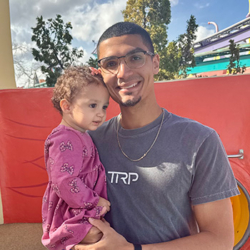
 My grandfather was born in Paradise Valley, Nevada, in 1903, and my Dad was born in Winter Haven in 1928. I came along in 1957, and then my daughters were born in the early 1990s.
My grandad, the first Lorin Bice in the family, only lived a brief time in Nevada. The Bices arrived there in the last part of the 19th century, where his father, Samuel, was a telegraph operator.
My great-grandfather died too young and left two young boys with their widowed mother and Dr. William Bice (my great-great-grandfather) to care for them.
In about 1906, Dr. Bice heard there was land for the asking in Central Florida, so he moved the family to Winter Haven, where he practiced medicine for the few remaining years of his life on this old orb.
The Bice family has spent about 120 years in Florida watching the world go by, and we have seen a lot of changes, just like your family.
Growing Up Among the Groves
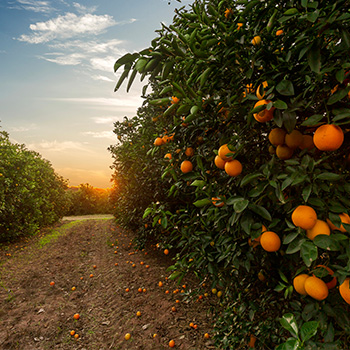
In the 1920s, my grandfather pulled his financial future up by the bootstraps and started planting orange trees.
Have you ever seen a seedling orange tree? Most of the citrus trees you might be familiar with are grafted onto a rootstock for better disease resistance and higher yields. I still love those old seedling trees, however. They grew tall, with thick trunks, so tall that pickers couldn’t reach the top fruit, necessitating a periodic “topping” of the trees periodically. They also had thorns that grew up to about 4 inches long.
As part of my grove work in my youth, I sometimes had to climb those trees for various tasks. You do not want one of those dagger-like thorns in your head. They hurt like the devil, and something about them causes the wound to linger for up to two weeks.
By the time my father was 29, and I came along, both my Dad and Granddad were firmly ensconced in the citrus business. It gave them an exceptionally good livelihood for a long time, and provided luxuries and benefits that were way beyond anything I might have merited.
Florida grew up along with my family in the 20th century, with three mainstays as its economic lifeblood: citrus, cattle, and phosphate. Yes, there were row crops throughout the state, and Big Sugar had a large footprint in South Florida. And then there was tourism, largely based upon the sunshine and white sand beaches.
Weathering the Storms: The Decline of Florida’s Citrus Industry
And things changed. Droughts, pestilence, and freezing temperatures are the way of life for a farmer. They make life a struggle instead of what might otherwise be an idyllic life. But on December 19th, 1989, I saw something I had never seen before. The temperature at six o’clock that evening was 19 °F. Now, you have to understand that any temperature below 28°F and sustained for more than 3 hours will kill a tree, and that’s about 10 years of production. That was the beginning of the end for the citrus industry. While a few hardy stalwarts still are trying to make a go of it, more deep freezes followed and then, for a a fatal dagger to the heart, citrus greening disease showed up in south Florida.
One hundred years after my Grandfather planted his first tree, no one in the Bice family has any citrus groves.
But Polk County survived and thrives in the 21st century. That Walt Disney fellow showed up with his shovel in 1965 and moved Orlando out of the sleepy cow town status it had known. JFK announced the space race, and technology took hold in Florida. You know the rest of the story, at least the story to date.
 A New Path: From Engineering to Financial Advising
 A New Path: From Engineering to Financial Advising
But being a citrus grower was never really in the cards for me. Dad talked to me during my last year of high school and said something to the effect of, “Son, there’s no room in the family business to add you, and expansion isn’t an option at this time. You have math skills so go study engineering, manufacturing, or accounting and get a j-o-b.
He was wise, my Dad. I did get that engineering degree and enjoyed a successful career in that field for 20 years until life circumstances dictated that I could no longer spend weeks at a time away from home, and the kids needed me. So twenty years more and here I am, the Financial Advisor you see before you.
Lessons from a Life of Change
So what did all this teach me?
- Success is not permanent.
- When you come to the end of the road and there is no place to go, make a turn. America really is the land of opportunity. Go get it.
- All those rows upon rows of citrus that we saw from Clearwater to Lake Placid in 1970, are now rooftops. Opportunity abounds.
- Be adaptable.
- Work hard and nurture your friendships. They are the real treasure in life.
- Be of good faith, and never give in to despair.
- The life everyone knew when they were kids is gone forever, but tomorrow can be a better life still, just different.
Resetting Priorities for the New Year
 Resetting Priorities for the New Year
And that, dear friends, is why I moved to Salt Lake City for a decade to hone my entrepreneurial skills, and why I came back to Winter Haven and Lake Wales after my kids were born. My family and friends are where I invested most of my life’s journey. It’s a good life, but I always take some quiet time each new year to review my priorities and make sure I’m on the right track.
Perhaps you might like to make that a habit too.
January 2026